
- Home
- Symptom Checker
-
Services
Allergy
Diagnostics
Aesthetics
Hormone Balancing
Gut Health / Nutrition
- Blog
- Podcasts
- Resources
-
About Us
About Us
- Contact Us
August 4, 2026

You feel tired all day, yet your mind races the moment your head hits the pillow. You push through mornings on caffeine, crash in the afternoon, and then lie awake with racing thoughts. Sleep never fully restores you. You know you slept, but you still don’t feel fully rested.
This pattern has become remarkably common. Many people describe it as feeling wired but tired. It points to a widespread disruption in the body’s stress and energy system, centered on cortisol and the HPA axis.
Chronic stress, irregular sleep, constant stimulation, hormone imbalance, and modern lifestyle demands have created what many alternative and integrative providers now recognize as a cortisol dysfunction epidemic. Understanding this pattern is the first step toward restoring steadier energy and deeper rest.
Your body responds to stress through the hypothalamic-pituitary-adrenal axis, or HPA axis. The hypothalamus signals the pituitary gland. The pituitary then signals the adrenal glands to release cortisol and other hormones.¹
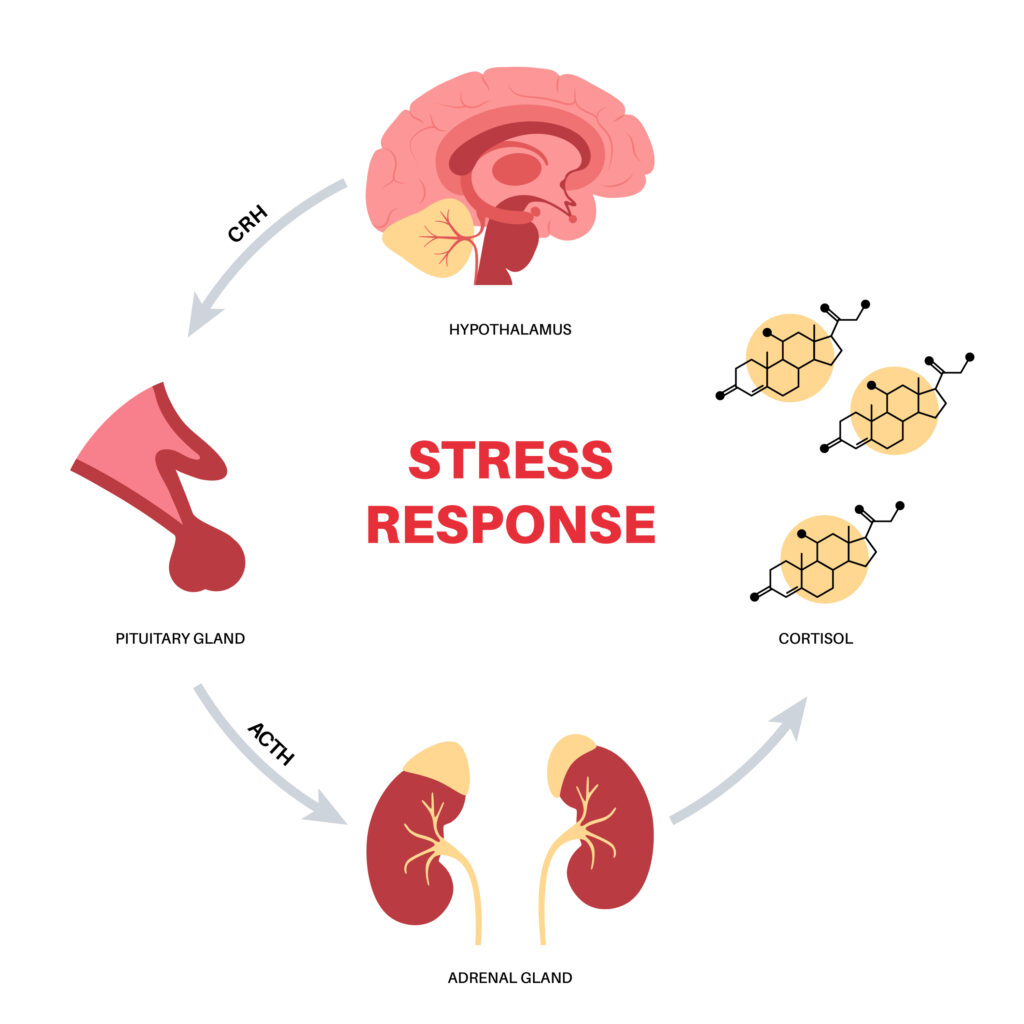
Cortisol is essential. It supports blood pressure, metabolism, immune function, and daily alertness. Problems arise when cortisol activity becomes poorly timed or remains elevated for too long.
In today’s environment of nonstop demands, blue light, caffeine, and inadequate recovery, this disrupted pattern has become widespread. That is why so many people report the same frustrating combination of daytime exhaustion and nighttime alertness.
Cortisol normally follows a clear daily rhythm. Levels rise before and after waking to help you feel alert. They then decline steadily through the day and reach lower levels at night.¹
This rhythm supports daytime energy and evening sleepiness. However, chronic stress, packed schedules, poor sleep, shift work, extended work hours, juggling demanding work and family life, late-night light, illness, and hormone imbalance can flatten or invert the pattern.
Chronotype is a person’s natural preference for the timing of sleep and peak alertness, and this can also influence and impact your daily rhythm. Some people (morning types) feel most alert early in the day, while others (evening types) feel more alert later. When work or family demands push an evening chronotype into early mornings, or a morning chronotype into late nights, the mismatch can intensify daytime fatigue and evening restlessness.
Circadian misalignment occurs when the internal body clock falls out of sync with the external schedule. This can happen with shift work, frequent travel across time zones, irregular bedtimes, or prolonged evening light exposure. Over time, this misalignment can flatten or delay the cortisol curve, reduce daytime energy, and make it harder to wind down at night. The result is often the same pattern many people describe as feeling wired but tired.
The table below shows common cortisol patterns and the energy symptoms that often accompany them.
| Cortisol and energy pattern | What you may notice |
| Healthy morning rise and gradual decline | Easier waking, steadier daytime energy, and greater ease of getting to sleep at night |
| Higher evening activation | Racing thoughts, muscle tension, light sleep, or difficulty falling asleep |
| Flatter daily rhythm | Morning exhaustion, afternoon crashes, low resilience, or heavy caffeine use |
| Irregular rhythm | Unpredictable energy, nighttime alertness, and inconsistent sleep |
Recognizing these patterns can help you notice when your cortisol rhythm may be off and what symptoms often appear alongside it.
Many people experiencing cortisol dysfunction notice a recognizable cycle:
These symptoms can also appear with hypothyroidism, anemia, sleep apnea, blood sugar problems, nutrient deficiencies, menopause, low testosterone, depression, anxiety, infections, and medication effects. Persistent fatigue should never be dismissed as “just stress.” Getting to the root cause is essential, because treating only the surface symptoms rarely leads to lasting improvement.
Stress protects you during short-term challenges such as responding to sudden danger, handling an acute injury, or meeting a demanding deadline. However, repeated stress without adequate recovery creates allostatic load, the cumulative wear and tear on the body and brain produced by repeated or chronic stress.
Chronic disruption of the HPA axis and circadian rhythm reduces stress resilience.¹ Poor sleep then increases HPA-axis reactivity the following day. A systematic review found that lower sleep quality can increase cortisol responses to stress.²
This creates a self-reinforcing loop:
The adrenal glands sit high in the body’s hierarchy of glands. When demand for cortisol stays high for long periods, the body can convert sex hormones into cortisol to keep essential functions going. This shift may affect energy, mood, motivation, and reproductive hormones.
That is why many people with long-standing cortisol dysfunction also notice changes in menstrual cycles, fertility, libido, or recovery capacity. The body is prioritizing survival over other functions.
Wake at a similar time each day, including most weekends. Then seek outdoor light early in the morning.
Morning sunlight is one of the strongest signals that sets your body clock. It supports the natural morning rise in cortisol that helps you feel more alert and ready for the day. In addition, early outdoor light can improve daytime energy, bolster a healthier mood, and make it easier to feel sleepy at the right time later in the evening. It is also a great source of Vitamin D!
In contrast, bright light late at night can delay sleep timing.⁵ A steady morning routine that includes outdoor light can therefore make evening sleepiness more predictable.
Track coffee, tea, chocolate, energy drinks, and pre-workout products. Next, move your final serving earlier.
Caffeine deserves special attention. The average half-life of caffeine in healthy adults is about five hours, meaning half the amount is still active that long after you drink it. In a controlled study, 400 milligrams of caffeine disrupted sleep even when participants consumed it six hours before bedtime.³ The afternoon coffee used to fight fatigue frequently contributes to another restless night.
Many people begin with a noon cutoff. However, caffeine sensitivity varies, so some people need an even earlier limit. Reduce intake gradually when sudden withdrawal causes headaches.
Choose meals that include protein, fiber-rich vegetables, and healthy fats. Additionally, avoid relying on sugary snacks to correct every afternoon crash.
Long gaps between meals affect some people more than others. When blood sugar drops too low, the body emits stress hormones (including cortisol and adrenaline) to raise it again. This response can trigger irritability, anxiety, and the familiar feeling of being “hangry.” Notice when cravings, shakiness, headaches, or irritability appear. Your provider can also evaluate glucose regulation when symptoms suggest a problem. You may want to consider wearing a continuous glucose monitor. These can help you understand your peaks and drops, and which foods are impacting them.
Regular movement supports sleep, mood, and metabolic health. A meta-analysis found that physical activity can improve several measures of sleep.⁶
Intense training is not always better, especially when energy is already low. Choose walking, mobility work, or moderate strength training when harder workouts leave you more depleted. Build in recovery days and increase intensity only when your body is ready.
Ongoing strain builds up over time. A yearly vacation cannot offset a nervous system that stays activated day after day.
Your body needs regular signals of calm that support the parasympathetic (rest-and-digest) system. The vagus nerve plays a key role in this recovery process. Short practices like diaphragmatic breathing, prayer, quiet walking, gentle stretching, journaling, or a tool like Truvaga can help shift the body out of a prolonged stress state and lower the cumulative stress load. We often recommend the Truvaga device to young adults and college students who seem to be experiencing very high levels of stress and anxiety in a very busy environment. Just two minutes of use can help achieve a much-needed calming effect.
Lower the lights and stop working before bedtime. Then choose a calming routine, such as reading, stretching, praying, or taking a warm shower.
Screen-emitted blue light can delay the natural wind-down process. TrueDark glasses, including the Sunsets and Twilights styles, can help reduce this evening light exposure and support a gentler transition toward sleep.
Many guests also find supplements such as our Sleep Formula helpful as part of their evening routine. This complete formula includes melatonin, L-tryptophan, chamomile, valerian extract, and inositol to support a calm transition into rest.
Sleep hygiene helps create the right conditions for rest.
Lifestyle changes matter, but they do not explain every case. Consequently, persistent symptoms of cortisol dysfunction warrant a more extensive health assessment.
Testing may include a complete blood count, iron markers, thyroid markers, glucose measures, nutrient levels, and sex hormones. A provider may also evaluate cortisol when the clinical history supports it.
Additionally, snoring, gasping, morning headaches, or severe daytime sleepiness may point toward sleep apnea. Those symptoms deserve an appropriate sleep evaluation.
Cortisol does not work alone. Thyroid hormones, estrogen, progesterone, testosterone, DHEA, insulin, and melatonin also alter energy, mood, metabolism, and sleep.
When the body faces prolonged high demand for cortisol, it can draw from sex hormones to help meet that need. This prioritization may leave less available for reproductive and other functions.
| Hormone | Common effects when levels are low or imbalanced |
| Thyroid hormones | Fatigue, brain fog, cold sensitivity, weight changes |
| Estrogen / Progesterone | Sleep disruption, mood changes, cycle irregularities |
| Testosterone | Low energy, reduced motivation, decreased muscle strength, lower libido |
| DHEA | Reduced resilience, lower energy, slower recovery |
| Insulin | Energy crashes, cravings, irritability |
| Melatonin | Difficulty falling or staying asleep |
Therefore, treating one symptom without examining related systems may miss important contributors. It is extremely important to work with alternative and integrative providers who have experience and expertise in reading not only your bloodwork (which will often read normal, but you may not feel “normal” at all) but also your clinical symptoms. In addition, providers who have experience in partnering with you to find the root cause of your symptoms and balancing your hormones appropriately. Remember, more is often not better. Balancing your hormones is complicated but can be life-changing.
Hormone production declines over time. When replenishment is medically appropriate, Hotze Health & Wellness Center recommends bioidentical hormones, as opposed to synthetics, and individualized monitoring.
At Hotze Health & Wellness Center, we specialize in finding root causes through alternative and integrative approaches, frequently serving as the last stop for guests (at Hotze Health & Wellness Center, we call our patients guests) who have consulted multiple doctors without resolution. Our guests tell us they wish we were the first stop! Listening to clinical symptoms and replenishing hormones can be all one needs to resolve symptoms, rather than prescribing often unnecessary pharmaceutical drugs.
We evaluate thyroid function, sex hormones, and adrenal cortisol together. We listen carefully to the clinical symptoms you experience in each of these areas, even when previous lab results have been called “normal.” Oftentimes, cortisol hormone replacement specifically is not necessary. Balancing deficient hormones, introducing a healthy eating program, and providing needed vitamin and mineral supplementation typically help resolve symptoms. When indicated, we may recommend low-dose bioidentical cortisol compounded in our pharmacy. This is typically a very low dose of three to five milligrams, designed to support and help revive adrenal function rather than replace it. Healthy adrenal glands produce roughly 20 to 30 milligrams of cortisol each day. High-dose synthetic steroids such as prednisone or cortisone work very differently and can suppress the body’s own production. Our approach is more like gently rebooting a system that is designed to last a lifetime.
We then work with each guest to develop a personalized plan that addresses both current symptoms and sustained resilience.
We evaluate the body as a whole rather than focusing on a single symptom. This allows us to look for underlying contributors while supporting lasting improvement.
If the pattern of daytime fatigue and nighttime alertness feels familiar, a closer look at cortisol rhythm, hormones, and related systems may be useful.
You can schedule a free 30-minute phone consultation with one of our Wellness Consultants to discuss your symptoms and learn more about our approach.
Schedule your free consultation by clicking HERE.
You may also call 281-698-8698.
More information on our adrenal and stress support approach is available here: https://www.hotzehwc.com/adrenal-fatigue/
Chronic stress, circadian disruption, caffeine, hormone changes, and other factors can contribute. A complete history and symptom timeline help identify the most likely causes.
No. Cortisol levels vary throughout the day, and chronic stress can create different patterns. One symptom alone cannot diagnose a cortisol disorder.
Consider an evaluation when fatigue or sleep disruption lasts several weeks or begins to affect daily function. Also seek care for dizziness, unexplained weight changes, palpitations, low mood, or other persistent symptoms.
"*" indicates required fields

Holistic, functional medicine doctors in Houston, Texas specializing in bioidentical hormones, hypothyroidism, adrenal fatigue, menopause, perimenopause, low testosterone, allergies and LDI treatment, candida, detoxification, nutritional deficiencies, longevity and aesthetics.

© Braidwood Management, Inc. All Rights Reserved. The information on this website is provided for educational purposes only, and does not constitute any medical advice. By using this website you fully waive all legal claims based on any information contained herein, and fully agree to this disclaimer.
20214 Braidwood Dr., Houston, TX 77450
Copyright © 2026 Hotze Health & Wellness Center. All rights reserved.
Leave a Reply