
- Home
- Symptom Checker
-
Services
Allergy
Diagnostics
Aesthetics
Hormone Balancing
Gut Health / Nutrition
- Blog
- Podcasts
- Resources
-
About Us
About Us
- Contact Us
January 31, 2025
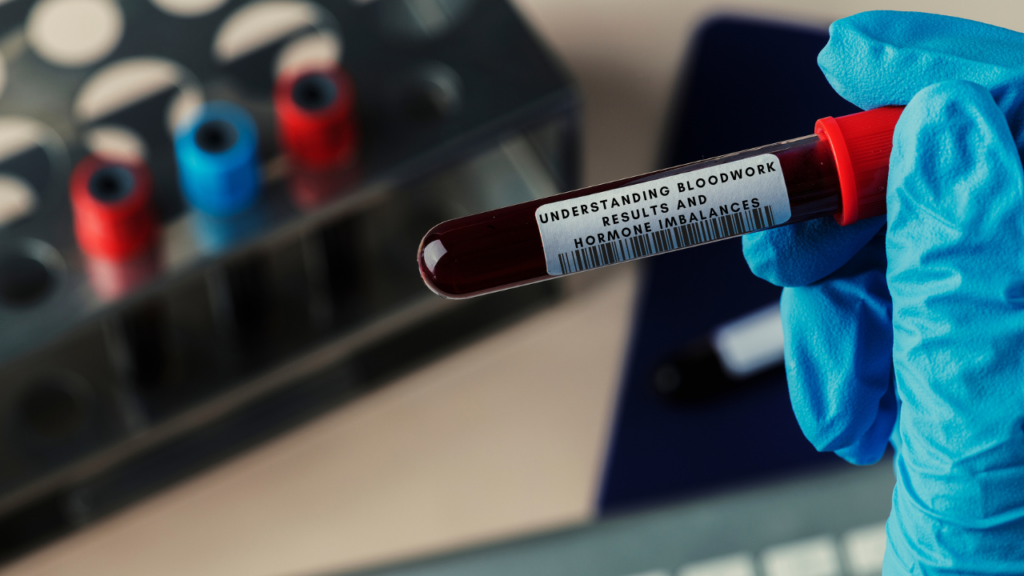
Have you ever heard the phrase, “Your bloodwork looks normal,” only to leave your doctor’s office feeling confused and frustrated because you still don’t feel well? If so, you’re not alone. Conventional medicine often labels bloodwork as “normal” based on wide reference ranges that don’t account for individual variations. ¹
Bloodwork reference ranges are established using data from large populations of individuals. Labs calculate these ranges by measuring test results from a diverse group of people and finding the average values. Typically, the middle 95% of the population’s results are considered “normal,” leaving out the lowest 2.5% and the highest 2.5%, which are labeled “abnormal.” ²
However, this approach comes with significant limitations:
For example, thyroid lab ranges vary significantly from one lab to another. A TSH (thyroid-stimulating hormone) level of 4.0 mIU/L might be flagged as “high” in one lab, while another considers it “normal.” This inconsistency highlights the need to focus on optimal health, not just population averages. ¹
At Hotze Health & Wellness Center, we understand that thyroid health is more complex than a single number on a lab report. When diagnosing hypothyroidism, we don’t just rely on the TSH test. Instead, we take a comprehensive approach that includes assessing clinical symptoms, listening to our guests (we call our patients “guests”), and reviewing multiple blood tests, including:
We place a high value on your clinical symptoms because they provide a clearer picture of how well your thyroid is being assimilated into your cells, so they have the energy to function. In addition, we have been practicing alternative approaches to medicine for 35 years and have transformed the lives of over 33,000 guests utilizing bioidentical hormone replacement therapy (BHRT). There is no “one size fits all” treatment plan to resolve symptoms. We have learned in our 35 years of experience that there is not one guest who is the same as another. Your symptoms and the varying degrees of severity are unique to you, so you will need a tailored regimen to support your body’s needs.
By looking at the full picture—your clinical symptoms and detailed lab work—we can better understand your thyroid health and help you achieve optimal well-being.
Your body’s symptoms are its way of telling you something isn’t right. Dismissing these symptoms because your test results fall within a broad “normal” range does a disservice to your health. You know what you are feeling and how you are feeling, and you are the key to the resolution of your symptoms on multiple levels. Hormone levels, particularly for thyroid, estrogen, progesterone, and testosterone, should be evaluated in the context of how you feel—not just against population averages. This is how we run our alternative medical practice. We listen and then we get to the root cause.
By listening to your symptoms and taking a holistic approach, you can uncover the root causes of your discomfort and work toward truly optimal health.
You deserve to thrive, not just survive! Functional medicine looks beyond the numbers, evaluating your symptoms, medical history, and lifestyle to determine whether your hormones are truly balanced. Hormonal imbalances are not something to ignore. Addressing them with targeted therapies, nutritional support, and lifestyle changes can help you regain vitality and well-being.
If you’ve been told that “everything looks fine,” but you know something is off, listen to your intuition. Fight for yourself and your health. You are the sole steward of your body! Your body knows when something isn’t right, even if a standard test says otherwise. Partnering with a provider who takes your symptoms seriously and prioritizes optimal health over statistical averages can make all the difference. At the Hotze Health & Wellness Center, we are often “the last stop.” Many of our guests have seen multiple providers before they come through our welcoming doors! The other providers just cannot seem to get to the root cause of their problems, oftentimes because they are treating based on bloodwork and treating with pharmaceutical drugs that only mask symptoms.
If what we have shared resonates with you and you would like to explore how you too might become a guest of the Hotze Health & Wellness Center, our Wellness Consultations are always complimentary. Simply call 281-698-8698 or schedule a complimentary consultation HERE.
It would be our privilege to serve you.
"*" indicates required fields

Holistic, functional medicine doctors in Houston, Texas specializing in bioidentical hormones, hypothyroidism, adrenal fatigue, menopause, perimenopause, low testosterone, allergies and LDI treatment, candida, detoxification, nutritional deficiencies, longevity and aesthetics.

© Braidwood Management, Inc. All Rights Reserved. The information on this website is provided for educational purposes only, and does not constitute any medical advice. By using this website you fully waive all legal claims based on any information contained herein, and fully agree to this disclaimer.
20214 Braidwood Dr., Houston, TX 77450
Copyright © 2026 Hotze Health & Wellness Center. All rights reserved.
Leave a Reply