
Andropause: The Male Menopause Explained
September 22, 2025

Have you noticed yourself slowing down in ways you can’t explain? Maybe you’re more tired after work, less motivated at the gym, or not quite yourself in your relationships. For many men, this slow shift shows up in their 40s and 50s — and it isn’t just “getting older.”
It may be andropause, often called the male menopause. Unlike women, who experience a clear hormonal change during menopause, men face a gradual, quieter decline in testosterone and other hormones. But even though it’s subtle, the effects can feel anything but small.
At Hotze Health & Wellness Center, we understand how frustrating this can be. Many men come to us after seeing multiple doctors who couldn’t explain why they felt drained, irritable, or disconnected. Our approach is different: instead of handing out prescriptions to mask symptoms, we uncover the root cause and build a plan that restores balance.
What Is Andropause?
Andropause, the male menopause, occurs when testosterone and other hormones like DHEA and growth hormone decrease steadily with age. Research shows that testosterone levels in men may decline by roughly 1% per year after age 30¹. ¹ While some decline is expected, the impact varies widely depending on lifestyle, genetics, stress, and overall health.
Common Symptoms of Andropause (The Male Menopause)
Energy & Strength
- Fatigue, even after rest
- Loss of muscle tone
- Slower recovery after workouts
Mind & Mood
- Brain fog, memory lapses
- Mood swings or irritability
- Low motivation or confidence
- Feelings of sadness
Sleep & Stress
- Trouble falling or staying asleep
- Night sweats or hot flashes (less common)
- Higher stress, lower resilience
Intimacy & Hormones
- Reduced libido
- Changes in intimacy
- Testicular shrinkage or breast tissue changes
Body & Health
- Increased belly fat
- Decreased bone strength
- Thinning body hair
Not every man experiences all of these, and the severity looks different for everyone. That’s part of the challenge: symptoms creep in gradually, and men often blame stress, aging, or lifestyle before realizing hormones are playing a role.
Andropause vs. Menopause: Key Differences
Calling it “male menopause” is catchy, but not quite accurate. Women typically experience menopause in a clear 12-month window when cycles stop. For men, the process is slower, stretching across decades. You don’t lose all reproductive function overnight, but your body still feels the shift.
That slow decline is why many men brush off their symptoms. It’s not one big change — it’s small changes that pile up. By the time it affects work, relationships, or confidence, many men are desperate for answers.
The Role of Testosterone in Men’s Health
Think of testosterone as the body’s “drive” hormone. It supports muscle strength, energy, fat distribution, red blood cell production, and sexual health. It also fuels motivation and mental focus.
When levels fall, the ripple effect touches nearly every part of life. Studies show low testosterone can reduce bone density, ², change metabolism, ³, and even contribute to mood disorders like depression. ⁴. No wonder men describe it as “losing their edge.”
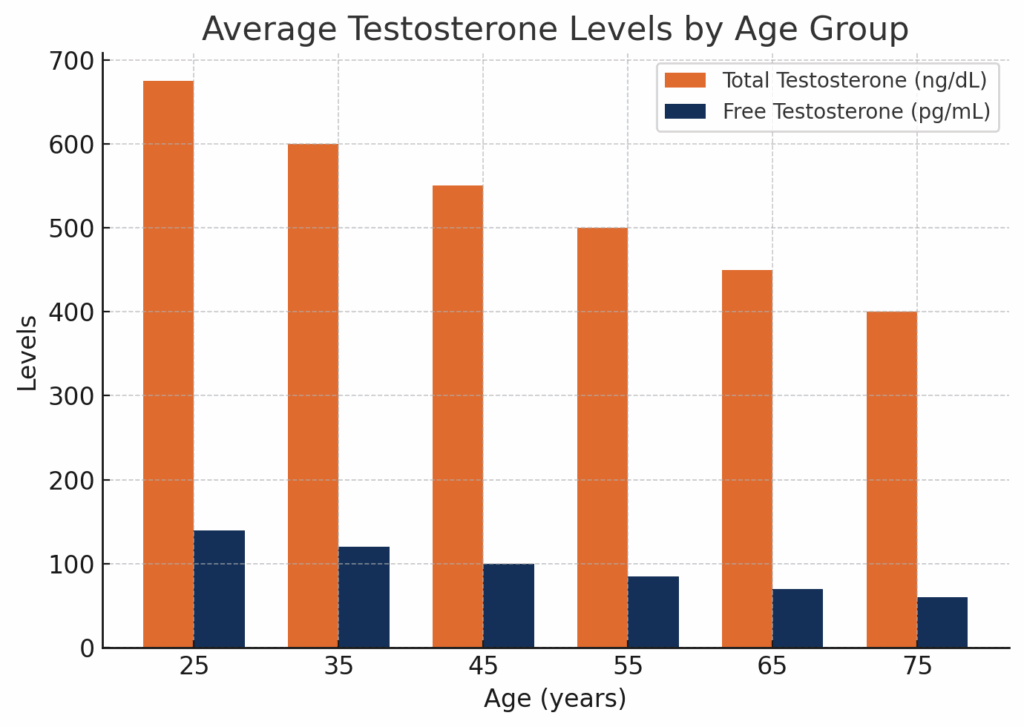
Total Testosterone vs. Free Testosterone
Most men don’t realize there are two kindsmeasures of testosterone that matter:
- Total testosterone: The full amount in your blood, but most of it is tied up with proteins and unavailable for absorption.
- Free testosterone: The small fraction (1–3%) your body can actually use. Think of it like the spending money in your wallet, compared to the savings account you can’t touch right away.
Here’s the catch: free testosterone — the part that powers your energy, mood, and strength — declines faster than total testosterone. That’s why two men with the same total number on a lab test may feel very different¹.
How Conventional Medicine Views Andropause
In conventional medicine, andropause is often brushed aside. Men are told, “That’s just aging,” or handed a prescription for antidepressants, sleeping pills, or erectile dysfunction drugs. These may cover the symptoms, but they don’t get to the real issue.
At Hotze Health & Wellness Center, we see things differently. Hormones are the body’s communication system. When that system gets out of tune, everything feels off. Instead of silencing the signals, we help identify why they’re happening in the first place.
An Integrative Approach to Reversing the Effects of Andropause
Here’s the good news: you don’t have to accept andropause as your new normal. By uncovering what’s happening with your hormones and overall health, we can take steps to restore balance. Our integrative approach often includes:
1. Hormone Balancing with Bioidentical Hormones
Bioidentical hormones are structurally identical to the ones your body makes. Unlike synthetic versions, they fit seamlessly into the body’s design. Research shows testosterone therapy can support muscle mass, bone strength, and mood in men with deficiencies. ⁵.
2. Optimizing Nutrition
What you eat matters more than you might think. Nutrients like zinc, magnesium, vitamin D, and omega-3s play direct roles in testosterone regulation. ⁶. Depending on your needs, we may recommend testing for micronutrient deficiencies to help personalize supplementation.
3. Exercise and Strength Training
Weight training and physical activity don’t just build muscle — they naturally boost testosterone. ⁷. Even simple, consistent movement can help balance hormones and lower stress.
4. Prioritizing Sleep
Your body produces testosterone during deep sleep. Poor rest means lower levels. ⁸. Protecting your bedtime isn’t just about energy — it’s about hormone health, too.
5. Stress Management
Chronic stress spikes cortisol, which suppresses testosterone. Techniques like breathing exercises, prayer, or even a walk outdoors can make a measurable difference.
Root-Cause Care: Why Men Come to Hotze Health & Wellness Center
By the time many men reach us, they’ve already tried everything else. They’ve been told theirtold their labs look “normal.” They’ve collected prescriptions that only made things worse. And still, they don’t feel like themselves.
That’s why we do things differently. We look for the root cause instead of writing off your symptoms. We also believe God designed your body with the ability to return to balance when given the right support. Our mission is to walk alongside you as His hands and feet, helping you rediscover the vitality you thought was gone.
Taking the Next Step
Recognize the signs. Reclaim your drive.
If you suspect you’re experiencing andropause, the male menopause, you don’t have to keep guessing. Fatigue, irritability, and loss of motivation aren’t just “part of life” — they’re signals your body needs attention.
At Hotze Health & Wellness Center, we’ll listen to your story, run the right tests, and create a plan built around you. You can feel like yourself again.
📞 Call us today at 281-698-8698 or schedule your complimentary consultation online: Book Here.
References
- Harman, S. Mitchell, et al. “Longitudinal Effects of Aging on Serum Total and Free Testosterone Levels in Healthy Men.” The Journal of Clinical Endocrinology & Metabolism, vol. 86, no. 2, 2001, pp. 724–731. Oxford Academic, https://doi.org/10.1210/jcem.86.2.7219. Accessed 20 Sept. 2025.
- Behre, Hermann M., et al. “Long-Term Effect of Testosterone Therapy on Bone Mineral Density in Hypogonadal Men.” The Journal of Clinical Endocrinology & Metabolism, vol. 82, no. 8, 1997, pp. 2386–2390. https://doi.org/10.1210/jcem.82.8.4178.
- Grossmann, Mathis. “Hypogonadism and Male Obesity: Focus on Untangling Causation from Association.” The Journal of Clinical Endocrinology & Metabolism, vol. 103, no. 8, 2018, pp. 2764–2774. https://doi.org/10.1210/jc.2018-01200.
- Zitzmann, Michael, et al. “Testosterone and Mood in Aging Men.” Asian Journal of Andrology, vol. 15, no. 2, 2013, pp. 232–238. https://doi.org/10.1038/aja.2012.108.
- Saad, Farid, et al. “Onset of Effects of Testosterone Treatment and Time Span until Maximum Effects Are Achieved.” European Journal of Endocrinology, vol. 165, no. 5, 2011, pp. 675–685.
- Prasad, Ananda S. “Zinc: An Antioxidant and Anti-Inflammatory Agent: Role of Zinc in Degenerative Disorders of Aging.” Journal of Trace Elements in Medicine and Biology, vol. 26, no. 2-3, 2012, pp. 66–69. https://doi.org/10.1016/j.jtemb.2012.04.001. https://doi.org/10.1530/EJE-11-0221.
- Kraemer, William J., and Nicholas A. Ratamess. “Hormonal Responses and Adaptations to Resistance Exercise and Training.” Sports Medicine, vol. 35, no. 4, 2005, pp. 339–361. https://doi.org/10.2165/00007256-200535040-00004.
- Leproult, Rachel, and Eve Van Cauter. “Effect of 1 Week of Sleep Restriction on Testosterone Levels in Young Healthy Men.” JAMA, vol. 305, no. 21, 2011, pp. 2173–2174. https://doi.org/10.1001/jama.2011.710.
Contact Us
"*" indicates required fields
Recent Posts
Categories
- ADD/ADHD
- Adrenal Fatigue
- Adult Acne
- Aesthetics
- Allergies
- Anti-Aging
- Antidepressants
- Anxiety
- Arthritis
- Artificial Sweeteners
- Asthma
- autoimmune disease
- BBL
- BHRT
- Bioidentical Hormone Replacement Therapy
- blood pressure
- Brain Fog
- brain health
- Breast Cancer Awareness
- breast health
- Candida
- children
- Cholesterol
- constipation
- Crohn's Disease
- dental health
- Depression
- detox
- Estrogen
- Facials
- Fatigue
- Fatty Liver Disease
- Fatty Liver Program
- Fibromyalgia
- Gluten
- Gut Health
- Hair
- Halo
- Hashimoto's
- Health and Wellness
- healthspan
- Healthy Living
- Healthy Recipes
- Heart Health
- Hot Flashes
- Hypothyroidism
- Hysterectomy
- IASIS Neurofeedback
- Immune System
- Infertility
- intermittent fasting
- Joint Pain
- Keto Diet
- Longevity
- Low Libido
- Men's Health
- Menopause
- Menstrual Cycle
- Migraine Headaches
- miscarriage
- mold exposure
- Mood Swings
- No Energy/Fatigue
- Nutrition
- obesity
- Osteoporosis
- perimenopause
- Postpartum Depression
- Progesterone
- Rapamycin
- Sirolimus
- skin care
- Skin Health
- sleep
- Stress
- Sugar Detox
- Teen Acne
- Teen Health
- Testosterone
- Tips for Healthy Eating
- Tubal Ligation
- Type 2 Diabetes
- uterine fibroids
- Vitamin D
Join
Sign-up for our Newsletter Join our REWARDS PROGRAM Today!Info

Holistic, functional medicine doctors in Houston, Texas specializing in bioidentical hormones, hypothyroidism, adrenal fatigue, menopause, perimenopause, low testosterone, allergies and LDI treatment, candida, detoxification, nutritional deficiencies, longevity and aesthetics.
Quicklinks
About Us
Media
HOTZE Links
Current Guests
Services
Treatments

© Braidwood Management, Inc. All Rights Reserved. The information on this website is provided for educational purposes only, and does not constitute any medical advice. By using this website you fully waive all legal claims based on any information contained herein, and fully agree to this disclaimer.
20214 Braidwood Dr., Houston, TX 77450
Copyright © 2026 Hotze Health & Wellness Center. All rights reserved.
Leave a Reply